
Guanyin (觀音, Guān Yīn) is one of the most beloved and revered figures in Chinese spiritual practice — honored in Taoism, Buddhism, and even Chinese folk religion.
This online space focuses on spreading the legacy of taoism: to promote wellness, meditation, handicraft and origami methods.
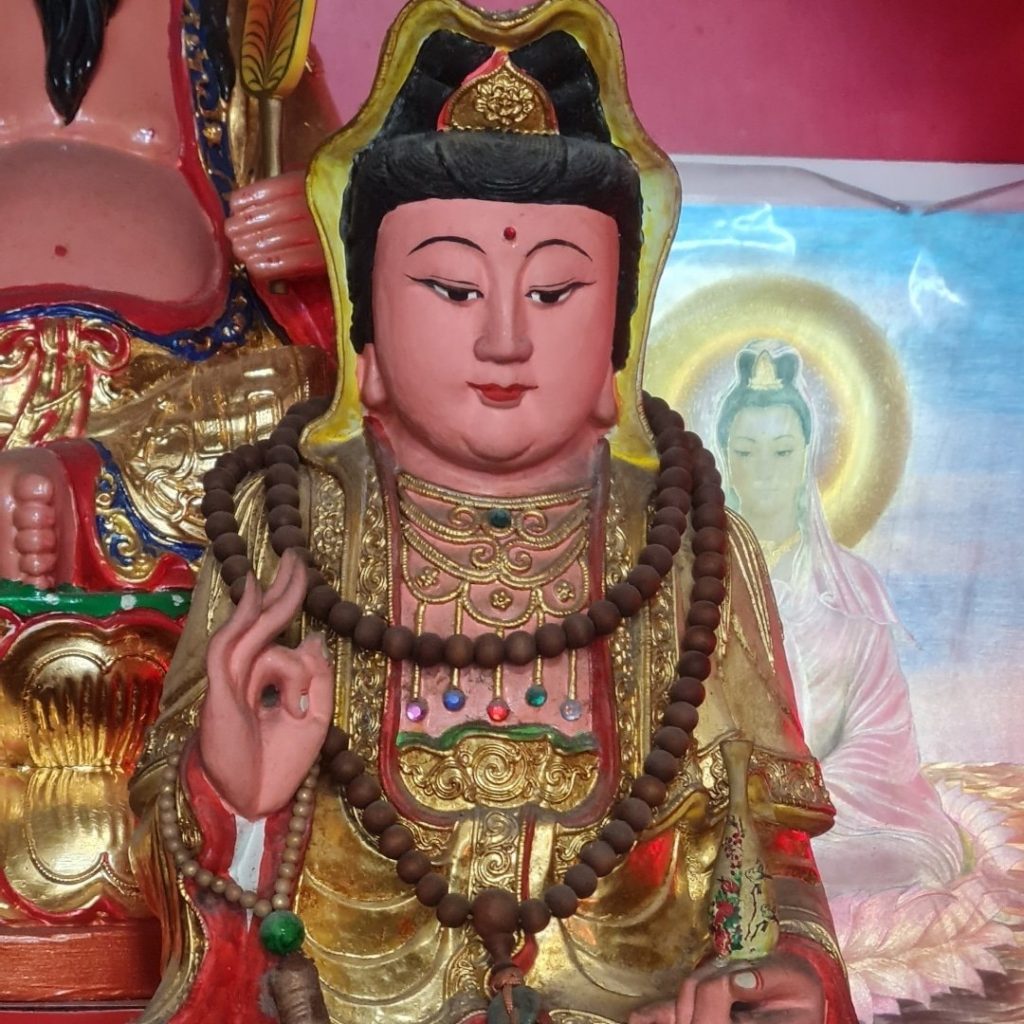
Short Daily Practice (Taoist–Buddhist Style)
Repeat as many times as you wish (often 3, 7, 21, or 108 times).
Light incense or a candle.
Face Guanyin’s image and bow three times.
Chant softly: 「南無觀世音菩薩」
(Námó Guānshìyīn Púsà)
— “Homage to the Bodhisattva Who Hears the World’s Cries.”
觀世音菩薩 (Guānshìyīn Púsà) – “The Bodhisattva Who Observes the Sounds (Cries) of the World.”
Meaning: Guanyin listens to the suffering of all beings and responds with compassion to relieve it.
Origin: In Mahāyāna Buddhism, Guanyin is the Chinese form of Avalokiteśvara, the Bodhisattva of Compassion.
In Taoism: Guanyin is often worshipped as a merciful goddess (慈悲女神), protector of life, families, travelers, and especially women and children.
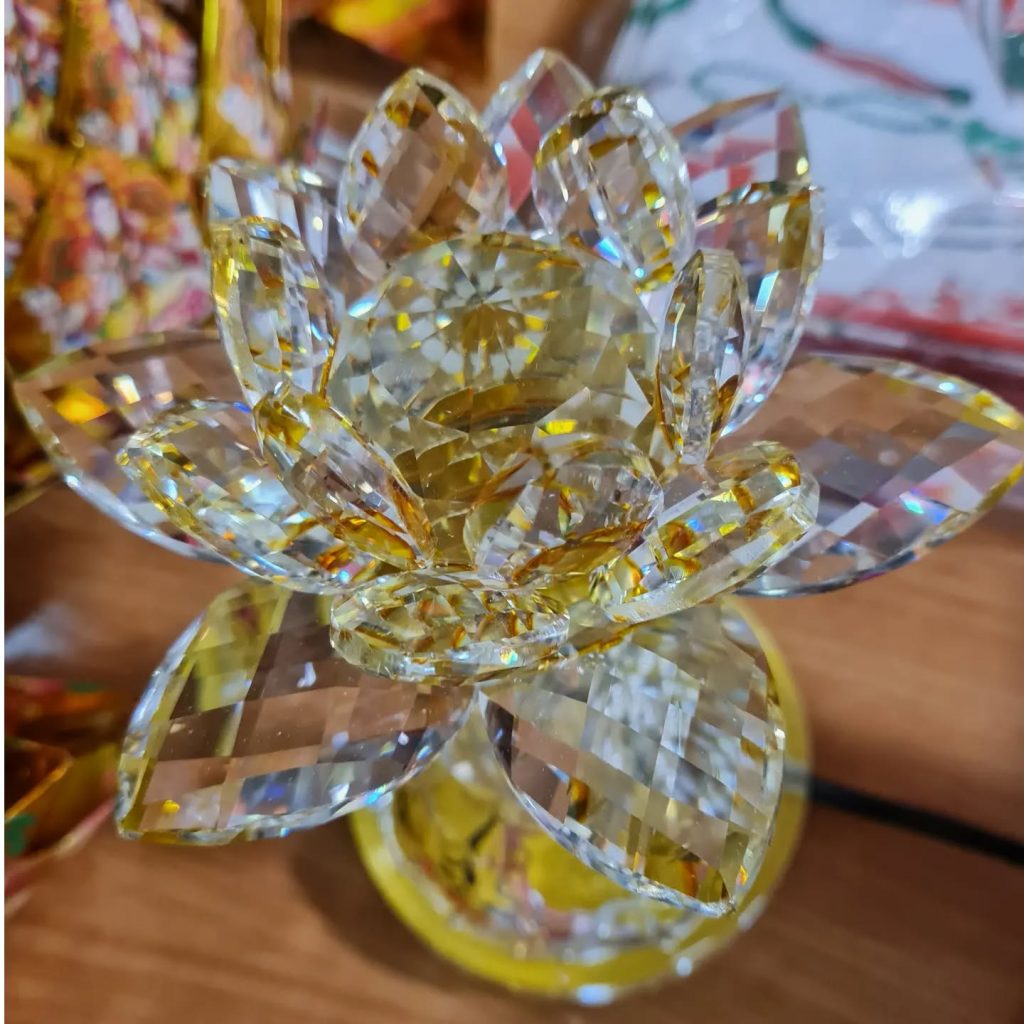
The philosophy of Guanyin (觀音) — especially in Taoist and Buddhist thought — centers on compassion, wisdom, and oneness with all beings. It’s not just about worship, but about transforming your own heart to mirror Guanyin’s mercy.🕊️
Symbols and Appearance
Guanyin is often shown:
Occasionally accompanied by a lotus flower (蓮花) — purity in the midst of suffering.
Wearing white robes (symbolizing purity).
Holding a vase (淨瓶) containing pure water — symbolizing mercy.
Sometimes holding a willow branch (楊柳) — symbolizing healing and flexibility.
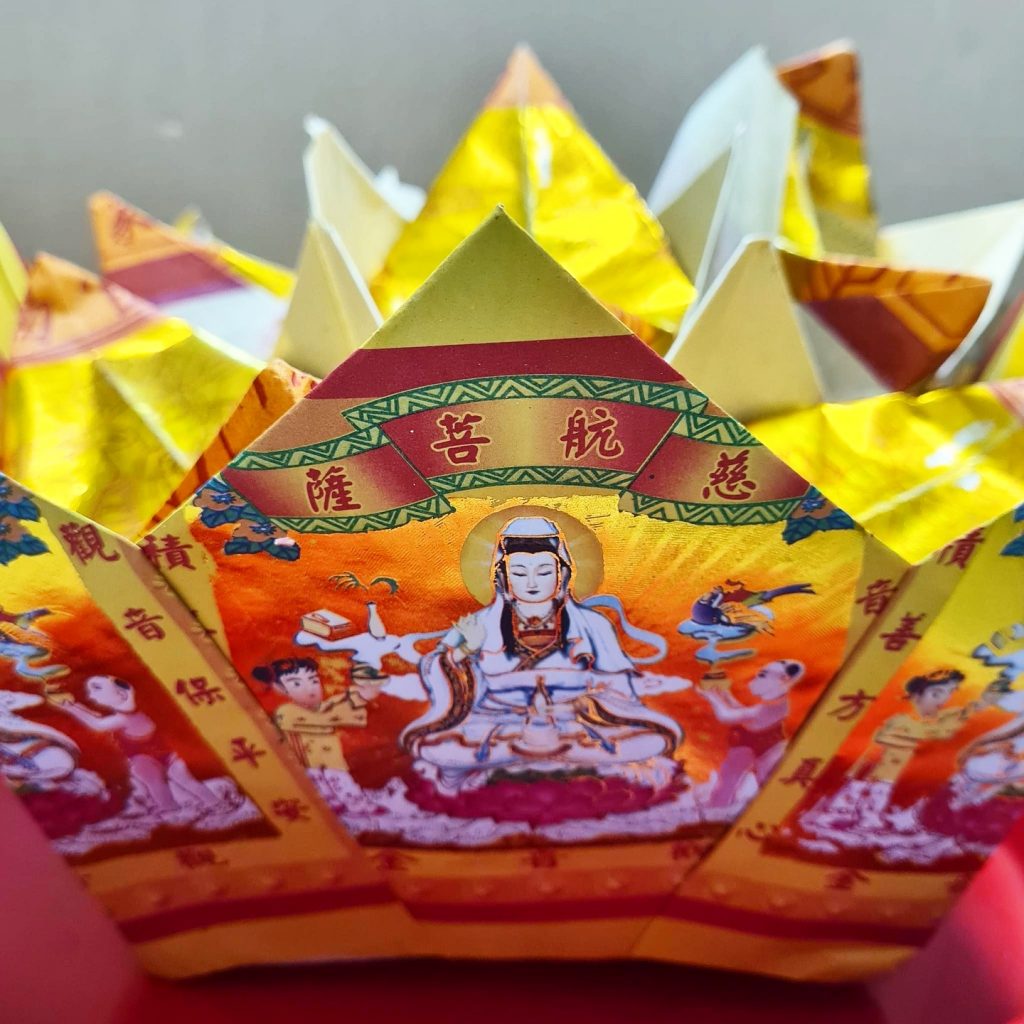
🕉️ Mantra of Guanyin
The most well-known mantra is:
「唵嘛呢叭咪吽」
(Ǎn Mā Ní Bā Mī Hōng)
or in Sanskrit: Om Mani Padme Hum
Meaning:
- 唵 (Om) – The sacred sound of all creation.
- 嘛呢 (Mani) – “Jewel” — the compassionate intention.
- 叭咪 (Padme) – “Lotus” — wisdom growing from purity.
- 吽 (Hum) – The union of wisdom and compassion.
✨ When you chant it, imagine your heart glowing with light and Guanyin’s compassion radiating outward to all beings.
UNDERSTANDING
🕊️ 1. The Core Philosophy of Guanyin
Compassion (慈悲 Cíbēi)
Guanyin embodies infinite compassion — the willingness to share the suffering of others and relieve it without judgment.
“To see others’ pain as one’s own — this is Guanyin’s heart.”
In practice:
Compassion is not weakness; it’s the greatest strength because it brings harmony (和 Hé) to yourself and the world.
When you show kindness, patience, or forgiveness — that is Guanyin acting through you.
☯️ 2. Taoist View
In Taoism, Guanyin represents the Divine Feminine aspect of the Tao — gentle, nurturing, yet powerful in her stillness.
- She reflects Yin energy (陰氣) — softness, yielding, adaptability.
- Yet through softness, she conquers hardness — echoing Laozi’s Tao Te Ching: “The softest thing in the world overcomes the hardest.”
Thus, Guanyin is seen as a manifestation of the Tao’s mercy, showing that true strength arises from harmony and balance, not force.
🪷 3. Buddhist View
From the Mahayana Buddhist perspective:
- Guanyin is the Bodhisattva who listens to the cries of the world (觀世音).
- Her goal is to free all beings from suffering — she vows not to reach Nirvana until all are liberated.
- The teaching: Wisdom and compassion are one.
- Wisdom sees the emptiness of self.
- Compassion acts for the benefit of all.
🌼 4. The Inner Path (Spiritual Practice)
Guanyin’s path is about awakening your own inner Guanyin — your compassionate nature.
You cultivate it through:
- Stillness (靜) — meditation and breath awareness.
- Listening (觀音 literally means “observe sound”) — listening to others’ pain and your own heart.
- Action (行慈) — practicing kindness and relieving suffering where you can.
When you live this way, you don’t just worship Guanyin —
✨ you become Guanyin in daily life.
💫 5. Essence in One’s Life
If Guanyin’s philosophy could be expressed in one Taoist-style line:
「以慈悲化萬物,與天地同心。」
“Transform all things through compassion, and be one in heart with Heaven and Earth.”
In Taoism, the concept of “harvesting your crops” is both a literal and a metaphorical lesson in living in harmony with the Tao, or the natural way of things. It encompasses physical practices like farming but also spiritual principles of cultivating one’s inner energy and living in a balanced, non-forcing manner.
The literal, agricultural meaning
- Align with natural rhythms: In Taoist philosophy, farming is an exercise in cooperating with nature rather than dominating it. The ideal farmer understands and aligns with the seasons, recognizing the appropriate times to plant, grow, and harvest crops, just as a Taoist aligns with the natural flow of life.
- Effortless action (Wu Wei): A core Taoist principle is Wu Wei, often translated as “effortless action” or “non-striving”. In farming, this means knowing when to intervene and when to “get out of the way” to let nature take its course. Over-managing and excessive “poking” at the crops can do more harm than good.
- Rituals for a good harvest: Historically, Taoist beliefs influenced agricultural practices. Farmers might offer prayers to the Earth God, a deity who guards the home and harvest, for a bountiful crop. Some rituals may mimic agricultural acts to symbolize the cyclical nature of farming.
The metaphorical, spiritual meaning
Non-attachment to the outcome: True Taoist wisdom lies in understanding that we are carried along by a “great current of Invisible Mystery”. Just as a farmer cannot guarantee a perfect harvest, a person cannot control all life’s outcomes. The practice is about influencing the process as best one can, then letting go of the need for a guaranteed result.
Harvesting and preserving Qi: In Taoist energy management, the body is viewed as an ecosystem. The process of “Harvesting and Preserving” (开源节流) involves both cultivating new energy (Qi) and minimizing its unnecessary expenditure. Practices for “harvesting” Qi include:
Qigong: Visualizing pulling energy from the cosmos into the body through breath and movement exercises.
Tai Chi: Using slow, circular motions to circulate and ground Qi.
Nourishing foods: Consuming natural, seasonal foods and herbal tonics to replenish vitality.
Aligning with nature: Waking and practicing with the sun to absorb the day’s freshest energy.
Reaping what you sow (Karma): A Taoist teaching emphasizes the principle of cause and effect, or karma. The results you “harvest” in your life—blessings or disaster—depend on the seeds you have “sown” through your actions. Good deeds yield good results, while evil deeds produce evil ones.
Balance of exertion and rest: The concept of “harvesting crops” also teaches the importance of balance. A farmer balances hard work with rest, and a Taoist practitioner balances physical activity with rest and introspection, particularly in the quieter Yin months of winter. This prevents overexertion, which drains the body’s vital essence (Jing).

“LOVE”
Forgivement

“COMPASSION”
Forgivement
“MERCY”
Forgivement